How 2D & 3D Laser Cutting Enhances Manufacturing Accuracy
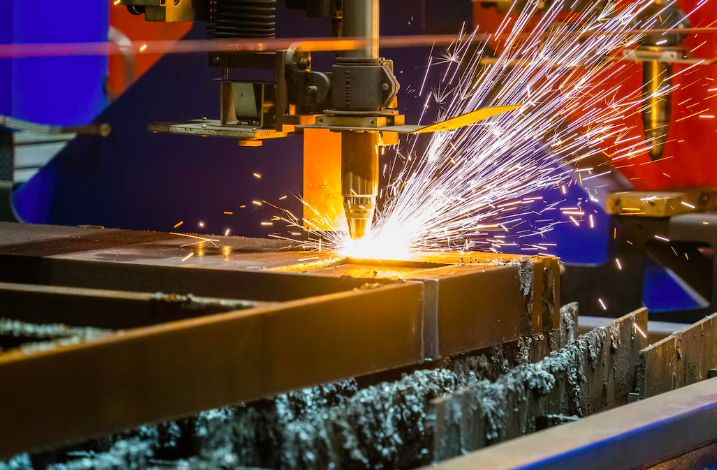
In today’s competitive manufacturing landscape, precision and consistency are critical to product performance and quality. Advanced technologies such as 2D and 3D laser cutting have transformed the way components are manufactured, enabling higher accuracy, improved efficiency, and superior repeatability across industries including automotive, fabrication, and renewable energy.
Understanding 2D and 3D Laser Cutting
2D laser cutting is primarily used for flat sheet metal processing, delivering highly accurate cuts for components with complex profiles and tight tolerances.
3D laser cutting, on the other hand, allows precise cutting of formed, tubular, or contoured components, enabling intricate geometries that are difficult to achieve through conventional methods.
Together, these technologies offer manufacturers unmatched flexibility and precision in modern production environments.
Superior Dimensional Accuracy and Tight Tolerances
Laser cutting provides exceptional dimensional accuracy due to its focused, high-energy beam and computer-controlled movement. Unlike mechanical cutting methods, laser cutting eliminates tool wear and reduces material deformation.
This results in clean edges, precise contours, and consistent part dimensions, ensuring that every component meets design specifications and assembly requirements.
Reduced Heat-Affected Zones and Material Distortion
One of the key advantages of laser cutting is its minimal heat-affected zone (HAZ). Controlled energy application reduces thermal distortion, preserving material properties and dimensional stability.
This is especially critical in automotive and structural components, where even minor deviations can impact performance, fitment, and safety.
Enhanced Capability for Complex Geometries
3D laser cutting enables manufacturers to process complex shapes, angled cuts, bevels, and contoured surfaces with exceptional accuracy. This capability is particularly valuable for tubular components, structural parts, and formed assemblies.
By achieving complex geometries in a single setup, manufacturers reduce secondary operations, improve consistency, and shorten production cycles.
Improved Production Efficiency and Repeatability
Laser cutting is a highly automated and repeatable process, ensuring uniform quality across high-volume production runs. Digital control allows rapid adjustments, faster setup times, and seamless integration with CAD/CAM systems.
This leads to higher productivity, reduced rework, and improved on-time delivery, supporting lean manufacturing objectives.
Consistency Across Multiple Industries
Industries such as automotive, heavy fabrication, non-automotive engineering, and solar infrastructure rely on laser cutting for consistent quality. Whether producing lightweight automotive parts or heavy structural components, laser cutting ensures uniform accuracy across diverse applications.
2D and 3D laser cutting technologies play a vital role in enhancing manufacturing accuracy, efficiency, and reliability. By delivering precise cuts, minimal distortion, and superior repeatability, laser cutting supports high-quality production standards required by modern industries.
Manufacturers that invest in advanced laser cutting capabilities are better positioned to meet stringent quality requirements, reduce operational costs, and deliver precision-engineered components with confidence.
Source: ChatGPT